wine tanks
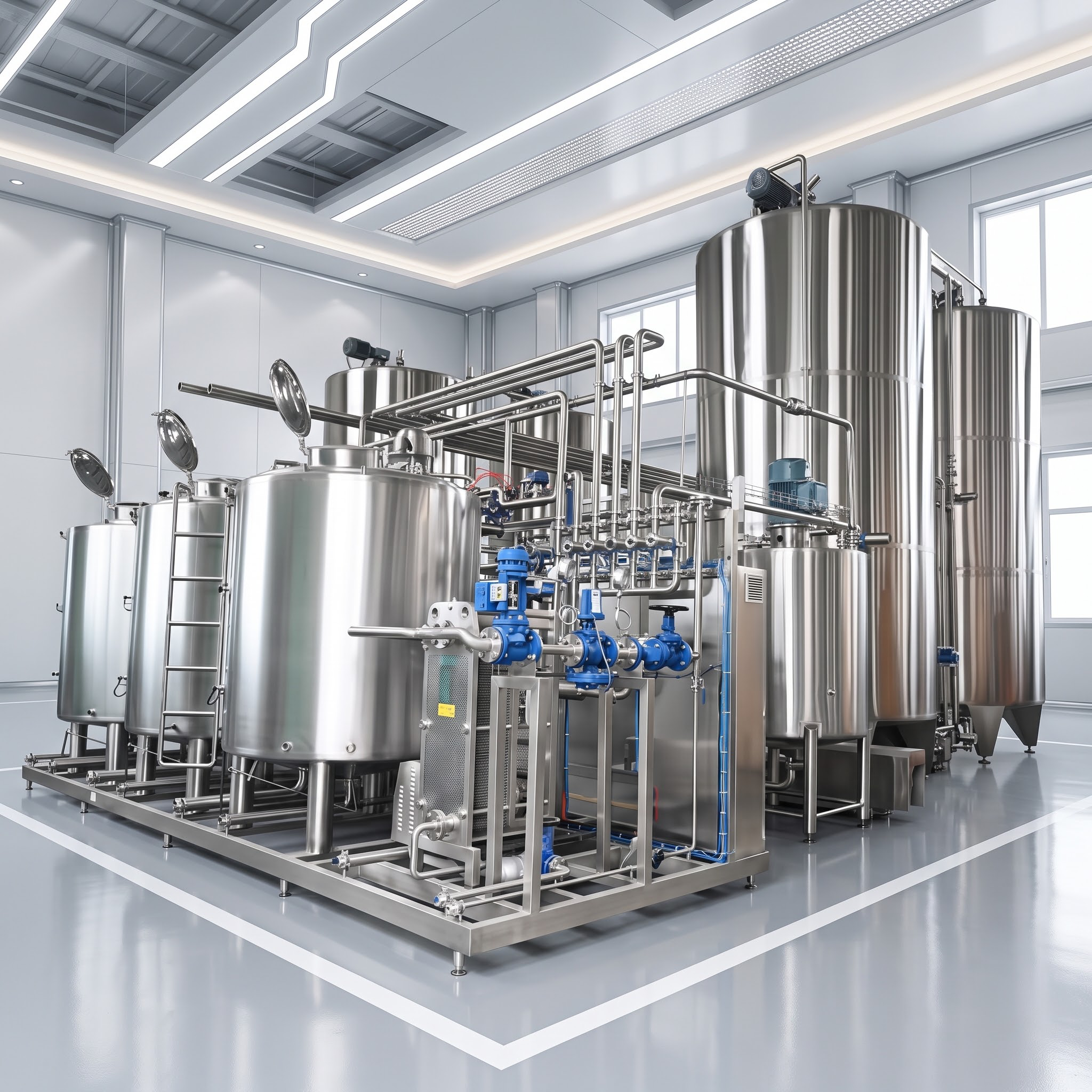
Red Wine Fermentation Tank is core equipment for winemaking, dedicated to alcoholic fermentation and maceration of red wine. They are used to store wine during fermentation and help control wine temperature.
Description
Wine tanks are an indispensable component of winemaking. They store wine throughout fermentation and assist in temperature regulation of wine. Wine tanks come in a wide range of sizes and materials, including Stainless steel, concrete and glass. They can be found in both small-scale and large-scale wineries and play a critical role in wine production. As an indispensable part of winemaking, wine tanks are available in diverse sizes and materials.
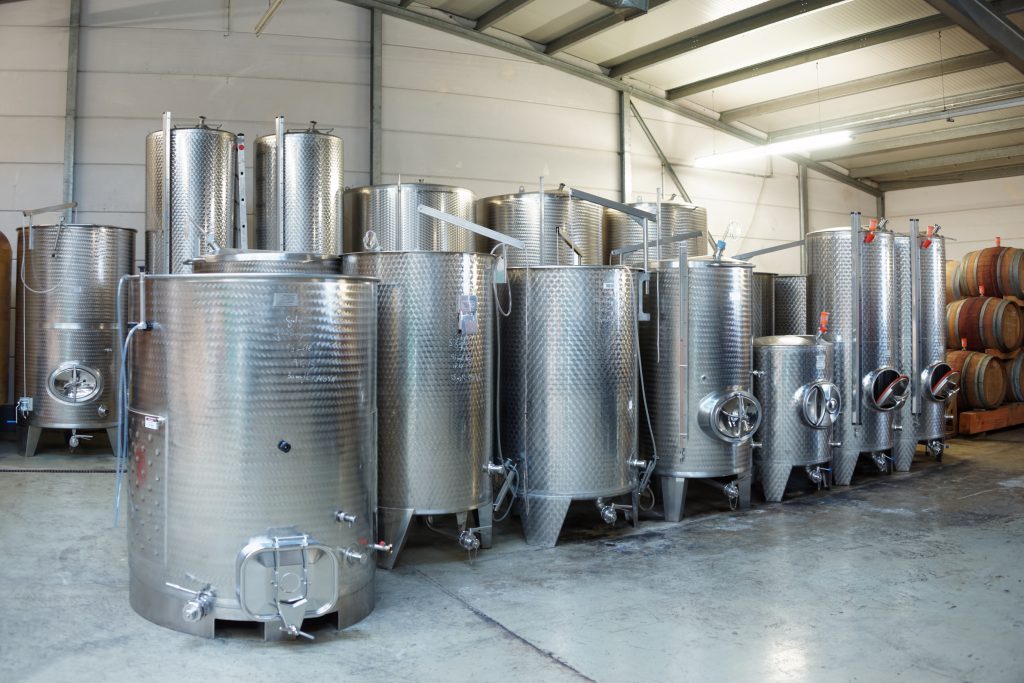
Product Name: Wine Tank
Material: 304 / 316L Stainless Steel
Shape: Cylindrical
Capacity: 200L-30000L
Polishing: Satin / Mirror Polishing
Components: Manhole, piping, inlet, outlet, thermometer, level gauge
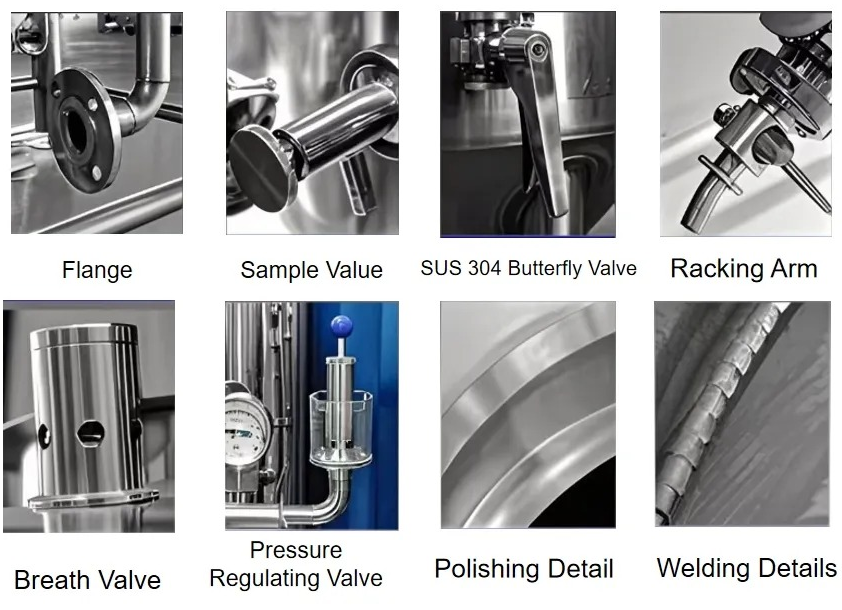
All wine fermentation and ageing equipment are fabricated from 304 stainless steel. The tanks feature an aesthetic exterior with a well-proportioned aspect ratio.
Exterior configurations such as heavy-duty taps, pyramid-shaped bases and flat bottoms can be custom-made to meet your requirements.
We can supply suitable tank structures tailored to the needs of different fruit wines.
Equipped with filter screens and roller devices inside, the fermentation tanks enable effective separation of pomace and lees to guarantee wine quality.
The inner tank wall is polished to a precision of 0.4-micrometre for easy cleaning and maintains biological stability across all winemaking procedures.
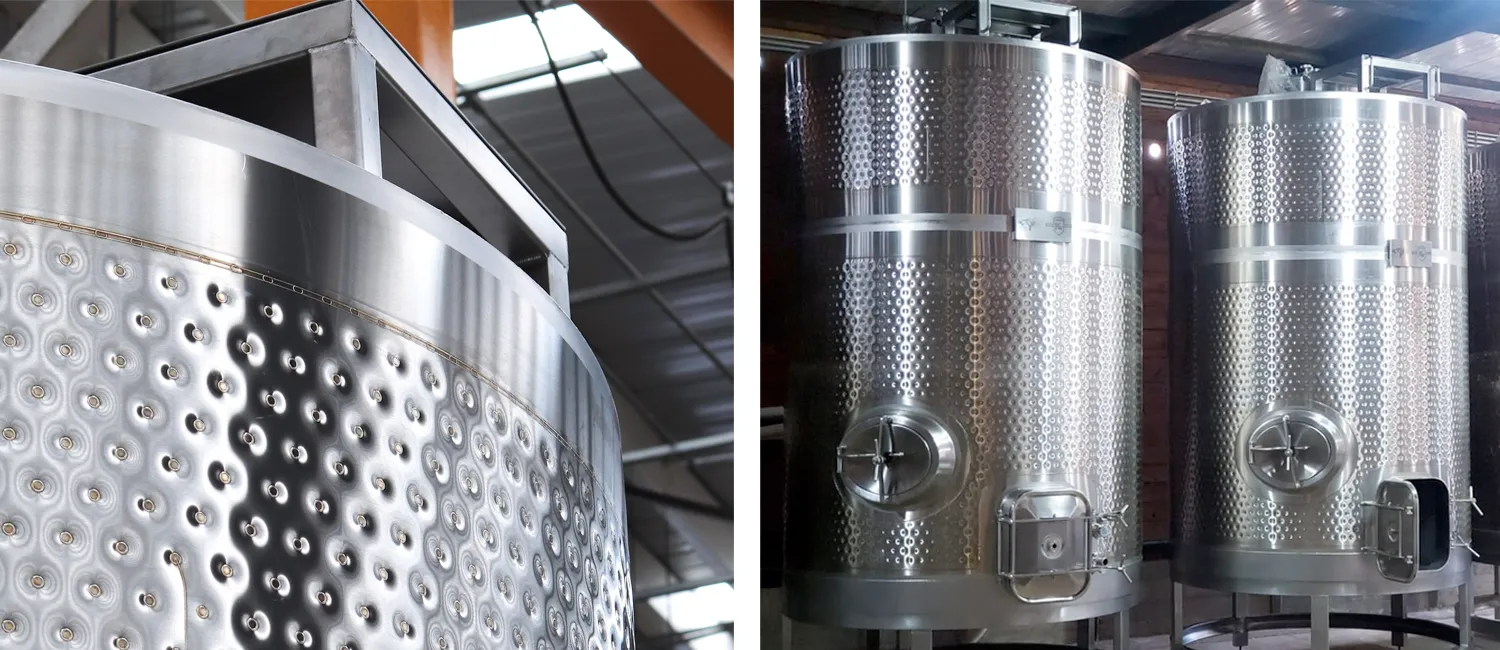
Temperature for fermentation and ageing tanks is controlled by refrigerant circulated through cooling jackets.
The dimple-plate jacket design delivers high heat-transfer efficiency and precise temperature control, so wine quality can be well preserved.
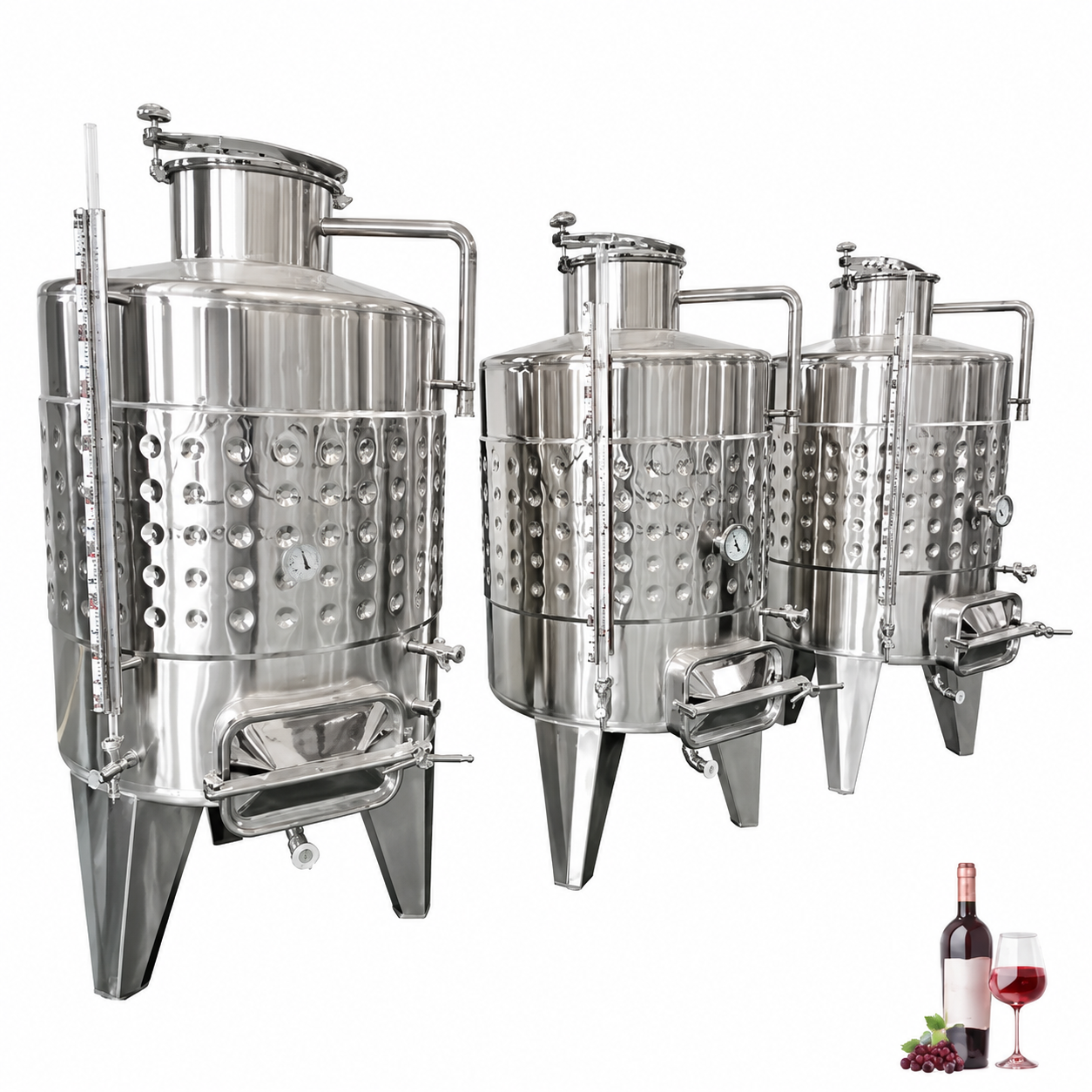
Fermentation tanks are undoubtedly one of the most critical links in winemaking; their performance directly determines the quality of fermented wine.
During red wine fermentation, pigment substances from grape skins and seeds diffuse unevenly, and mass transfer between upper and lower tank sections is limited. Circulation & pumping-over / spraying is required for homogeneous maceration. Optimized tank aspect ratio facilitates pumping-over operation, breaks mass-transfer barriers and promotes uniform dissolution of pigments and tannins for superior fermented wine quality.
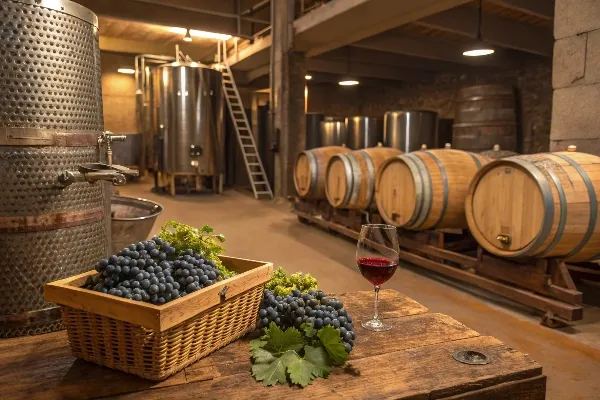
Comparison with oak barrels: Oak barrels are permeable, supplying trace oxygen for yeast respiration and creating micro-oxidative environment to stabilise trace wine compounds.
Sealed stainless-steel red wine fermentation tanks do not engage in internal mass exchange and deliver zero oxidative effect, ideal for pure-flavour fermentation.
1. Excellent corrosion resistance: Resistant to corrosion from ambient air and residual chlorine in water. Every storage tank undergoes rigorous pressure testing and inspection before delivery.
2. Superior sealing performance: The sealed structure prevents dust and insects from entering the tank, avoiding external contamination and worm infestation.
3. Low-frequency cleaning requirement: Sediments can be discharged by periodically opening the bottom drain valve. Descaling with simple equipment is recommended every three years to cut cleaning costs and fully eliminate contamination from human-borne bacteria and viruses.
FAQ
1. Are you a factory or trading company?
We are a factory
2. How long is the warranty period?
One year
3. What's the main market of your company?
We have customers all over the world
4.What's your delivery time?
Normally it is around 30 days, the exact time depends on product type and quantity.
5. What's the payment terms?
TT, LC, etc
6. Can we visit your factory?
Welcome to visit our factory!
Stainless-Steel Wine Fermenter Usage Guide
What is a wine fermenter?
Stainless-steel wine fermenters are vessels for grape must fermentation. Made of Stainless steel, they feature corrosion resistance, easy-to-clean surfaces and stable temperature control. Their core function is to enable yeast to convert sugars in grape juice into alcohol and carbon dioxide.
Types of Stainless-Steel Wine Fermenters
Thanks to superior performance, stainless steel is the dominant material for wine Fermentation vessels. Below are the most common types:
1. Open-Top Fermenter
Designed for red-wine fermentation. It provides easy access to grape skins and facilitates submerging skins into the fermenting liquid. Its wide sloped bottom simplifies removal of skins and seeds post-fermentation. Ideal for red wine production.
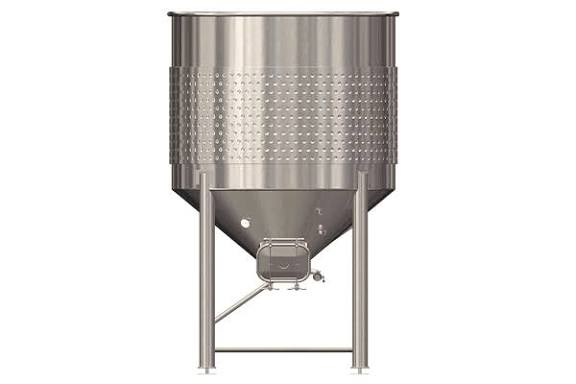
2. Pump-Over Wine Fermenter
A pump circulates juice slowly from the tank bottom to the top, submerging pomace thoroughly to extract maximum colour and flavour. Well-suited for red-wine fermentation.
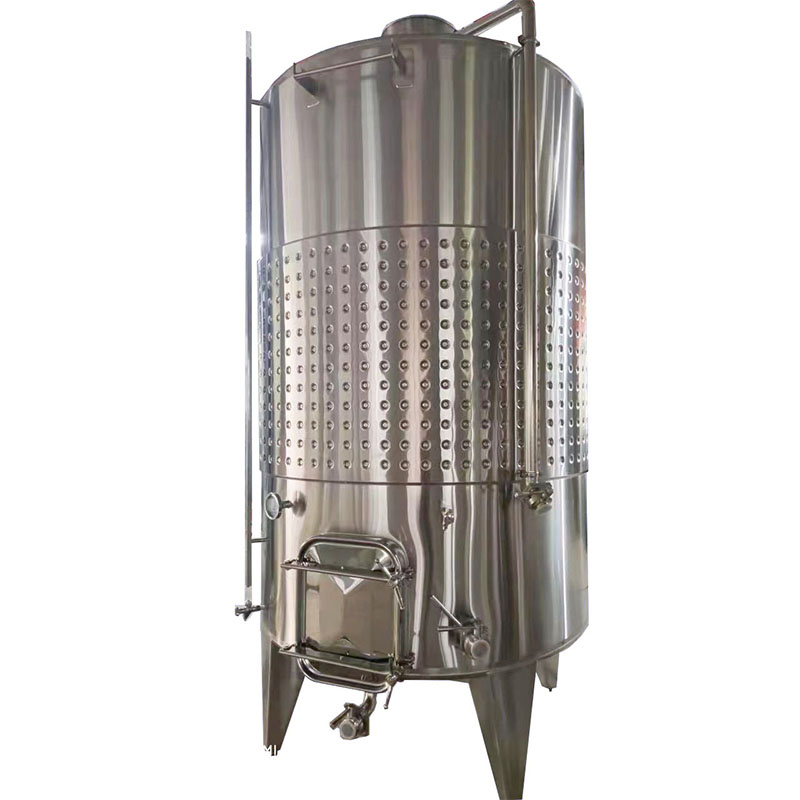
3. Stainless-Steel Conical fermenter
Fitted with a cone-shaped bottom that allows grape skins and sediment to settle during fermentation. Excellent for red-wine fermentation.
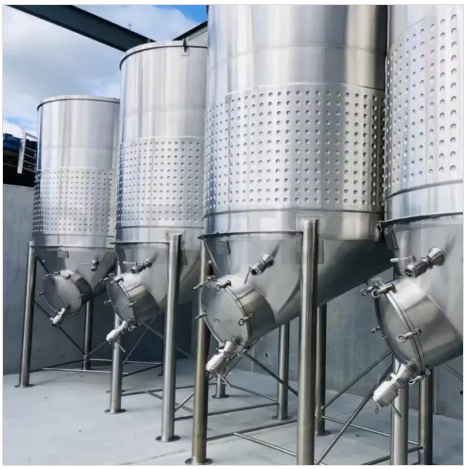
4. Wine Storage Tank
Equipped with jacketed or double-wall systems for temperature regulation via circulating coolant or heating medium. Suitable for red-wine storage, as well as fermentation and storage of white wine.
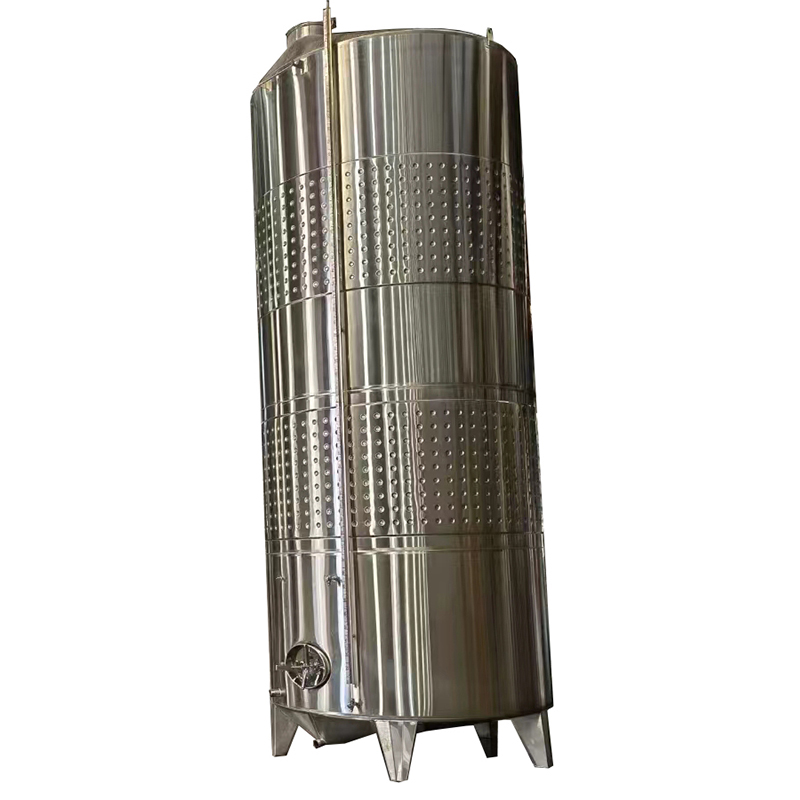
5. Forkliftable wine tank
Built-in forklift pockets for easy forklift handling. Perfect for large-volume wine storage and transport.
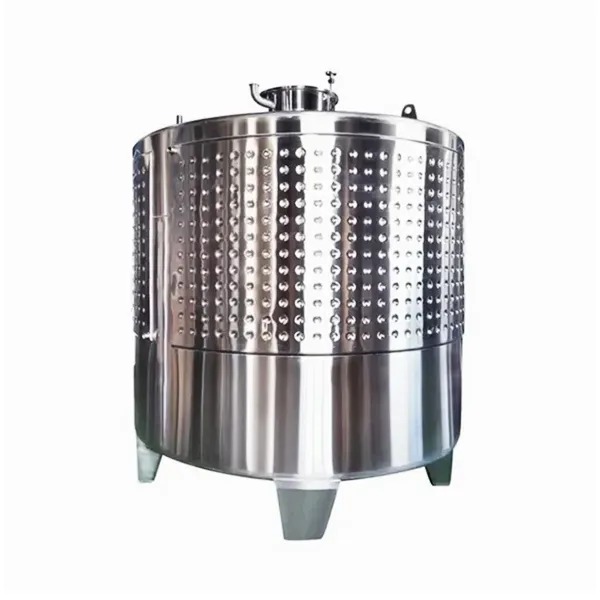
6. Variable-Volume Storage Tank
Fitted with an internal floating lid that adjusts automatically according to wine volume. It reduces headspace and minimises oxidation risk. Works for both red and white wine fermentation.
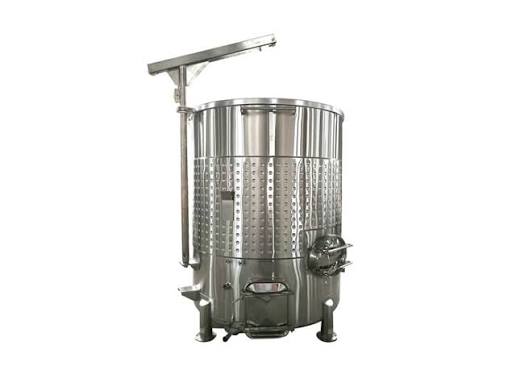
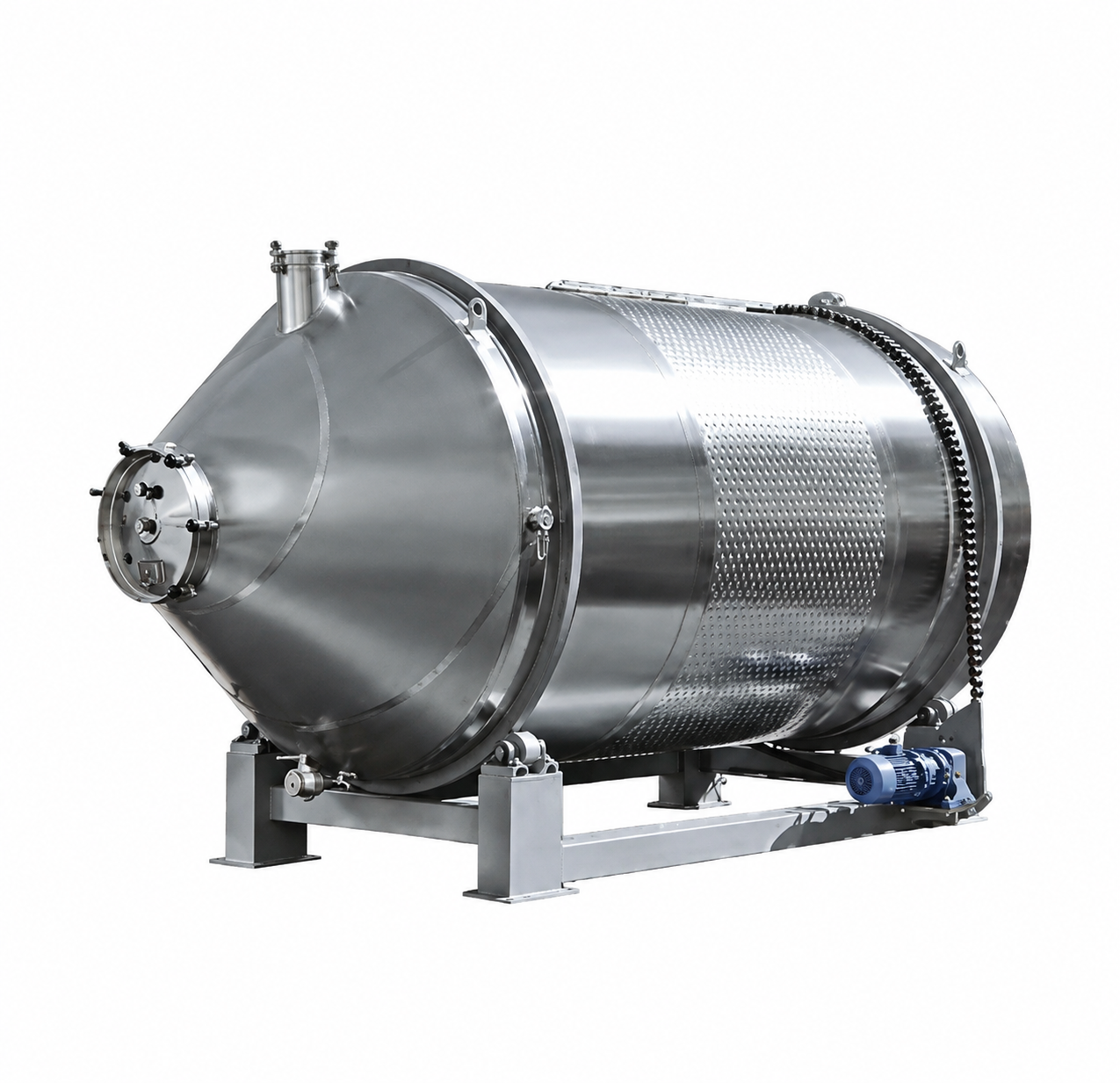
7. Horizontal Fermenter
Horizontal-oriented tank equipped with rotating agitation assemblies, maximising contact between grape must and skins. Optimised for red-wine fermentation.
Selecting the Right Stainless-Steel Wine Fermenter
Choosing a suitable fermenter is critical to optimise winemaking workflows and achieve target wine quality. The following points support informed decision-making:
1. Tank Size & Capacity Production scale: match tank dimensions to your winery’s output volume.
2. Temperature-Control Features
· Cooling jacket: stainless-steel tanks with integrated cooling jackets are essential for precise fermentation temperature control.
· Insulated tank: select insulated vessels to mitigate temperature fluctuations for tighter thermal management.
3. Open-Top vs Closed-Top Design
· Open-top: widely used for red-wine fermentation; convenient for manual cap punching to extract colour and tannins. Offers high flexibility yet carries higher oxygen exposure.
· Closed-top: preferred for white-wine fermentation to limit oxygen contact. Normally fitted with an airlock to vent carbon dioxide while preventing air ingress.
4. Agitation & Mixing Options Built-in agitator: aids homogenisation for certain winemaking processes such as cold stabilisation or must fermentation requiring oxygen exposure.
5. Portability & Installation
· Fixed tank: large-size units are permanently installed and plumbed to cooling systems, ideal for large-scale wineries.
· Portable tank: smaller vessels may need relocation within the winery; opt for models with forklift pockets for mobility.
6. Optional Features & Customisation
· Material grade: 304 stainless steel is standard; 316 stainless steel delivers enhanced corrosion resistance for select wineries.
· Port configuration: define positions and types for temperature probes, transfer valves and sampling ports.
· Surface finish: polished internal surfaces ease cleaning; external finishes can be custom-matched to winery aesthetics.
· Sloped / conical bottom: for red wine, sloped or conical bases simplify separation of juice from skins and pomace during pressing and draining.
· Level gauge: enables liquid-level monitoring without opening the tank.
· Sampling valve: allows tasting and testing wine mid-fermentation without disrupting the process.
By evaluating the above criteria, you can select a stainless-steel wine fermenter that optimises your winemaking workflow, improves wine quality and meets your production requirements.
Conclusion
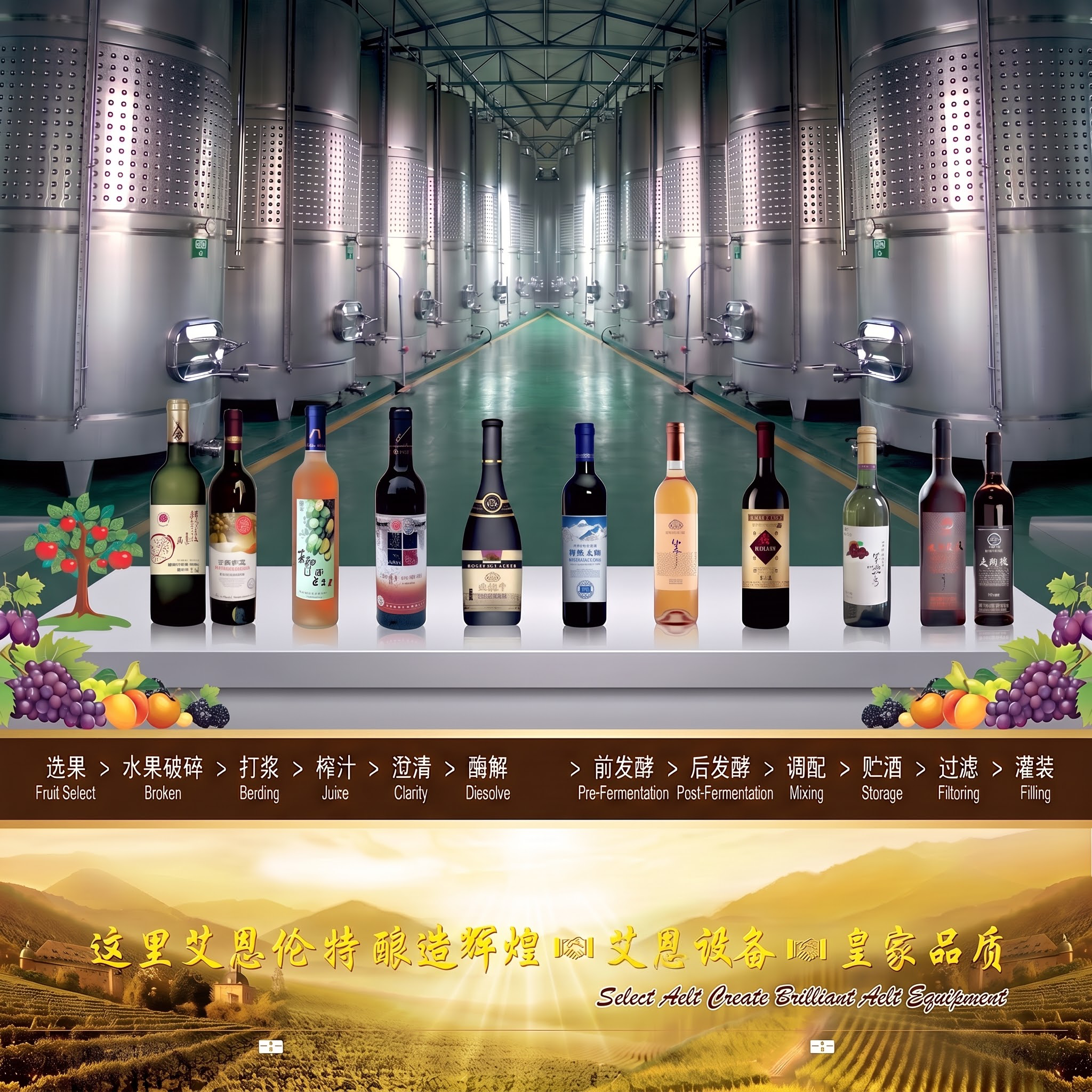
Aelt Wine Fermentation Tanks mark the starting point for producing premium-quality wine. More than just equipment, they serve as a bridge linking nature with technology, tradition with innovation. Suitable for large-scale wineries, small-and-medium-sized wine producers and beverage manufacturers, the tanks support personalized customization. Constructed from Stainless steel with excellent corrosion resistance, they offer optional wall thickness ranging from 2 mm to 12 mm and capacities from 1 cubic meter up to several hundred cubic meters to meet demands of different production scales. Widely applied for fermentation, storage and clarification of wine, fruit wine and other beverages, they process raw materials such as grapes, apples, red bayberries and mulberries.
 +86 29-87031531



 Telefone